Webflow is paving the way for a revolution in website localization. With its innovative localization solution, Webflow empowers businesses to offer tailored digital experiences to audiences across multiple languages and regions.
This article takes an in-depth look at Webflow's upcoming localization product, its significance, and how it will enrich the web design and development landscape.
The kickoff of Webflow's localization solution
In a recent update following its announcement at Webflow Conf 2022, Webflow confirmed that the eagerly awaited localization product is on track for a release in fall 2023. This solution is a testament to Webflow's commitment to improving the user experience and increasing the impact of websites built with the platform.
Webflow's localization product is designed to meet a crucial need in today's globalized digital landscape: the ability to adapt websites so they appeal to different regional audiences. As businesses increasingly operate across borders, the importance of tailoring websites to the unique needs of different regions cannot be overstated.
Localization vs. multilingual: a Webflow perspective
While localization and multilingual may seem synonymous, Webflow makes clear that “multilingual” is merely one facet of the broader concept of “localization.” Beyond simply translating the website text, localization involves personalizing the entire website experience, from the images and content displayed to the overarching styles and layout, so that it resonates with different regional audiences.

Against the backdrop of this broader perspective, Webflow's localization product is designed to offer an end-to-end solution for adapting websites to multilingual visitors. The product is built on three fundamental pillars:
- Design & build: This includes adapting designs and content to all locales.
- Content & translation: This includes translating website content for all locales or integrating specialized third-party translation management systems.
- Publishing & delivery: This includes controlling how localized content is published and delivered to website visitors.
Design & build
The design and build phase is arguably the most critical aspect of the localization process. This is where Webflow's localization product stands out, letting users harness the full power of Webflow to create localized websites.
At launch, users can expect the following features:
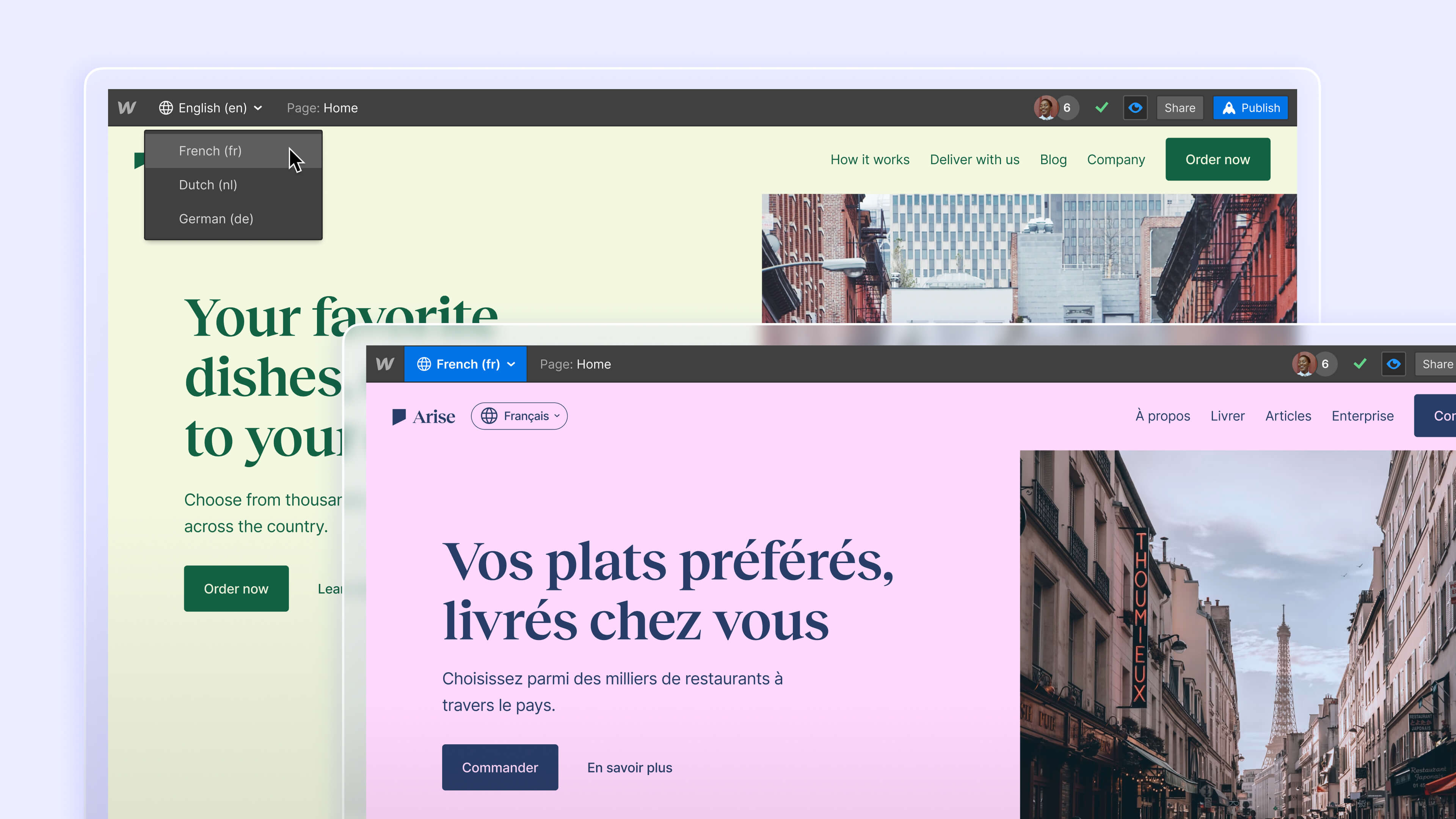
- Locale preview: Users can switch between locales in the Designer and preview them, so it is clear how the site will look before publishing.
- Content localization: Users can translate both static page content and CMS content directly for each locale.
- Image and alt text customization: Users can customize images per locale and change the alt text, ensuring a localized visual experience.
- Element visibility customization: Users can show or hide specific elements per locale, varying content depending on the visitor's region.
- Style customization: Users can adjust styles per locale to accommodate headings of different lengths, fonts, and more.
Content & translation
Webflow offers a flexible approach to content translation, accommodating businesses at different stages of their localization journey. From direct translation in the Designer to integration with existing translation management systems, Webflow's solution offers several options.
At launch, users can translate content using the following methods:
- Direct translation in the Designer: For granular control and edits, users can translate content directly in the Designer.
- Flexible API options: For businesses with existing translation management systems, Webflow offers updated APIs that enable programmatic connections to external systems.
- Machine-assisted translation: Webflow is developing automatic translation options to streamline localization.
- Partner translation apps: Webflow plans to build direct integrations with translation management systems at launch.
Publishing & delivery
When it comes to publishing localized websites and controlling the visitor experience, Webflow's localization product offers finer-grained control than third-party workarounds.
Key publishing features include:
- Locale publishing toggle: Users can control whether different locales go live when the site is published.
- URL and subdirectory customization: Users can customize the URL structure of localized pages for better SEO.
- Localization of SEO titles and descriptions: Users can localize meta titles and descriptions for each locale.
- Improved sitemap: The sitemap automatically includes the hreflang tag to help search engines understand the relationship between localized pages.
- Fully customizable locale switcher element: A new element lets users design a language switcher for visitors.
- Integration with publishing and staging: All workflows are fully integrated into existing and future publishing workflows for a seamless experience.
The road ahead
Webflow's localization product promises to be a significant enrichment of the web design and development landscape. The company has announced that enterprise customers will get early access to the product, with a broader rollout expected soon.
As the world waits for this new wave of innovation, one thing is clear: with its localization product, Webflow is reshaping the future of web design and development.